Guides
Blinds for heat and afternoon sun: what actually helps a west-facing room
A blind doesn't make the sun go away. It only changes where the sunlight lands once it's through the glass. Start from that and choosing fabric for an afternoon-sun room gets much easier than picking by colour.
Most of the heat in a sunlit room arrives with the sunlight coming through the glass. When that light lands on the floor, the sofa or a wall, those surfaces warm up and give the heat back to the room. A blind behind the glass takes the sun instead of your furniture: part of the light is reflected back out through the glass, part is absorbed by the fabric, and the rest passes into the room. Every fabric type and every colour splits those three parts differently, and that's what this whole guide is about.
Do blinds really block heat, and how much?
They help, within limits. A blind cuts the sun falling on people and on the things in the room, and it cuts glare clearly; anyone sitting by the glass feels the difference the moment it closes. But a blind isn't insulation. The glass is still as hot as before, and whatever heat the fabric absorbs is already on the room side. That's why we don't quote a number of degrees: the answer depends on the glass, the size of the window, which way the room faces and the air conditioning, and no two rooms match.
Sunscreen, dim-out or blackout for a room with afternoon sun?
| Sunscreen | Dim-out | Blackout | |
|---|---|---|---|
| Light through the cloth | Some, through the openings in the weave | A little. Clearly darker, not fully dark | None through the fabric itself |
| View out | Yes | No | No |
| Glare | Much lower, though with the sun shining straight in you can still see it as a bright spot through the cloth | Cut heavily | Gone wherever the fabric covers |
| The room with it closed by day | Still bright, no lights needed | Dim | Dark, lights on |
| Usually fitted in | Living rooms, glazed balconies, anywhere the view matters | Studies, daytime TV rooms | Bedrooms, media rooms |
For afternoon sun, the first question is whether you still want to see out with the blind down. If you do, sunscreen is the only option. If you don't, a denser fabric stops more of the sun that would otherwise pass through the cloth, at the cost of a room that needs its lights on in the daytime. The real fabrics and colours are on the fabric page.
The percentages in that table are roughly how much light each fabric stops. They're for comparing the options with each other, and they are not a heat figure. Each level is covered in more detail in blackout vs sunscreen fabric.
Which figure to read for UV, and what sunscreen openness means
For the GS sunscreen series we carry, the manufacturer's spec sheet states 30% polyester and 70% PVC, 5% openness and 95% UV blocked. There are two blackout series: GF, which is 60% PVC and 40% fiberglass, and GB, which is 100% polyester colour coated on both faces. The manufacturer's sheets state that both block 100% of light.
Openness is the gap between the threads of the weave. A fabric with low openness is denser: less sun gets through, and so does less of the view. A more open fabric gives a clearer view and lets more sun in. Both GS sub-series are 5% openness. They differ in thickness: GS 501-509 is 0.55 mm and GS 511-517 is 0.75 mm, per the manufacturer's sheet.
Light or dark fabric: which handles heat better?
| Light fabric | Dark fabric | |
|---|---|---|
| Heat | Reflects more of the sun back out; the cloth itself holds less heat | Absorbs more into the cloth, so the fabric runs warmer |
| Glare | The whole panel glows when the sun is on it, which some people still find bright | Handles glare better |
| View out (sunscreen) | Hazy and whitish, the view is less distinct | A clearer view |
| The room with it closed | Bright and open | More subdued, calmer |
In short: if heat is the room's main problem, lean light. If glare and a clear view matter more, lean dark. A mid tone such as grey is the middle road many homes take. The GS sunscreen series runs from cream through to charcoal, and we bring the samples to the measure. Hold one against the actual sunlit pane and the difference shows far better than it does on a screen.
What to fit in a west-facing room, and why it's the hard case
Afternoon sun differs from midday sun in its angle. Late in the day the sun drops low in the west, so the light comes in at a slant and reaches deep into the room. Eaves or an awning that deal well with midday sun do little against light that low, and by then the outside air and the building itself have been collecting heat all day. That makes a west-facing room the hardest case for any window covering, and it usually takes more than one measure working together.
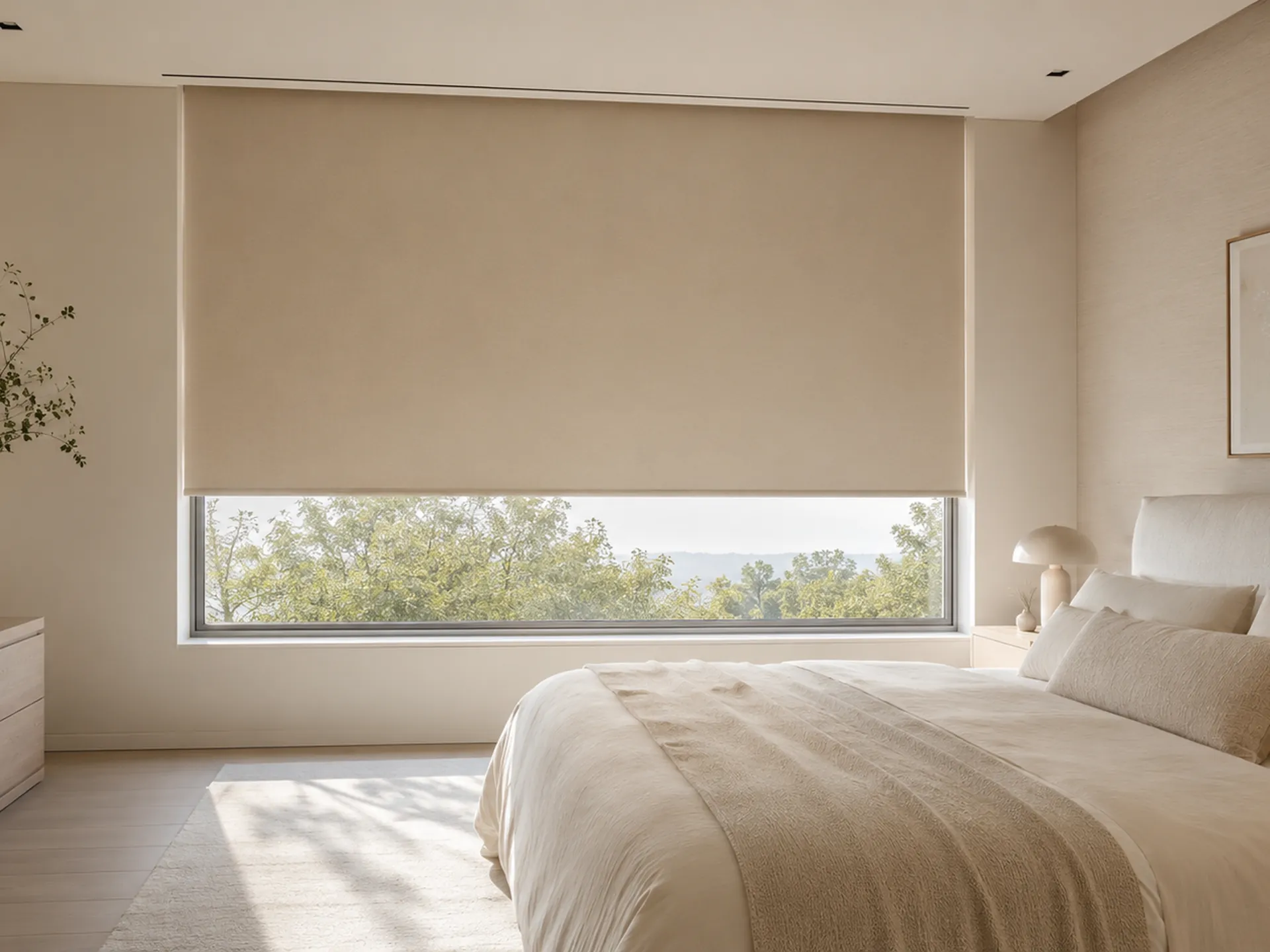
- A living room where you still want the view: a motorized roller blind in sunscreen fabric. Know in advance that with the sun shining straight in, you'll still see it as a bright spot through the cloth.
- A bedroom or TV room that doesn't need the view in the afternoon: blackout fabric, mounted over the frame so the least light leaks at the edges.
- Both in one window: two layers, for example a sheer curtain paired with an opaque one. Use the sheer on a normal day and close the opaque layer when the afternoon sun is at full strength.
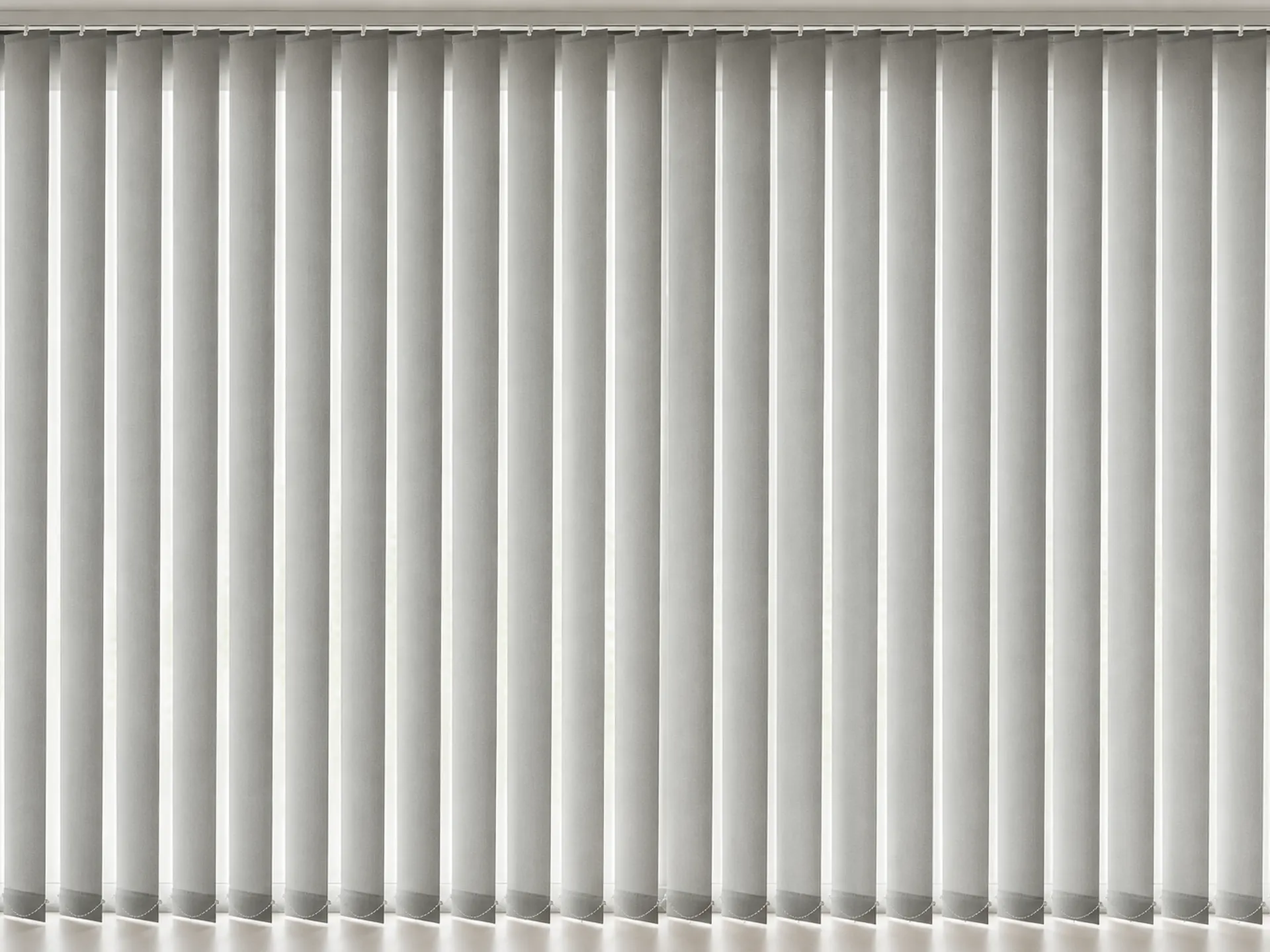
- Sliding glass doors or a wide glass wall: a vertical blind can turn its louvres to follow the sun, so it blocks slanting light while the room stays lit. Light always slips between the louvres, though, so it's the wrong choice for a room that must go fully dark.
Consistency is the part people overlook. The afternoon sun turns up at the same time every day, and the blind that's easy to close is the one that actually gets closed. A motorized roller blind runs from a remote, a phone app or a wall switch, and one remote can drive several blinds together, so a glass wall of several panels closes in one go before the sun fills the room. Whether a roller blind can be doubled up depends on the space above the glass and on the ceiling structure, so send us a photo of the window and ask.
Is a blind inside enough, or does the sun need stopping outside the glass too?
As a general principle, shading outside the glass stops the sun before it reaches the pane, so the glass itself heats up less. A blind inside the room goes to work after the sun is already through. The two act at different points and neither replaces the other. Outside shading takes many forms: eaves, awnings, slatted screens, trees, or a roller blind fitted outside the glass. Window film is another approach, working at the glass itself.
If your room gets hot enough that a blind inside can't cope alone, look at shading from the outside as well, and let the blind inside handle glare and privacy. For the kind of roller blind usually fitted outside glass and on balconies, read what a zip blind is. If it's a condo with large glass taking the afternoon sun, see the condo curtains guide too.
Afternoon sun: sunscreen or blackout?
It depends on whether you still want the view and a bright room with the blind down. If so, sunscreen. For a bedroom, or any room that can go dark, blackout stops more of the sun through the cloth. Rooms used day and night often end up with two layers.
How much UV does sunscreen fabric block?
For the GS sunscreen series we carry, the manufacturer's sheet states 95% UV blocked. That figure covers ultraviolet only. It is not a visible-light or heat figure.
Does dark fabric make the room hotter?
Dark fabric absorbs more of the sun into the cloth than light fabric does, so the fabric itself runs warmer. In return it handles glare better, and in a sunscreen it gives a clearer view. Which way to go depends on whether heat or glare is the bigger problem in that room.
Does closing the blind in the afternoon keep the room cooler?
It cuts the sun falling on the room's contents and on you, so it feels clearly more comfortable, especially near the glass. But a blind isn't insulation and the glass is still where the heat comes in. We don't put a number of degrees on it, because rooms differ too much.
How is a motorized sunscreen roller blind priced?
A motorized roller blind is priced by the square yard of fabric, plus a motor and installation per unit. The figures and the full working are in what a motorized roller blind costs.
Want the numbers for your own windows?
Send rough sizes first — no need to measure precisely. We'll work out a price, then arrange the real measure.