Guides
Wooden blinds or roller blinds? How to choose between them
These two are nearly three times apart in price, and people still pick by looks alone — when in fact they solve different problems.
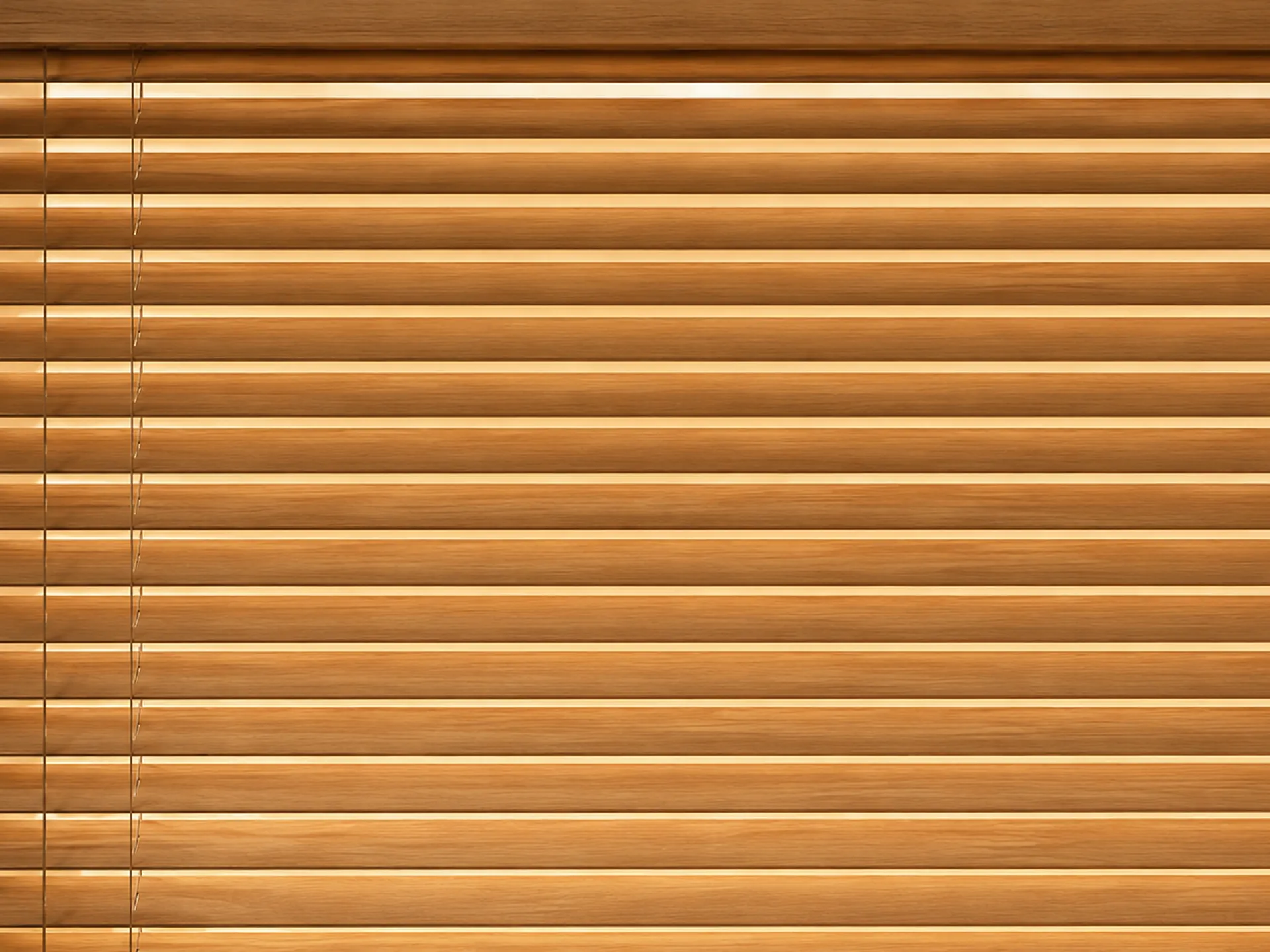
The real difference isn't the material, it's how each one controls light. A wooden blind is a stack of slats that tilt, so you choose how much light comes in and at what angle while the blind stays closed. A roller blind is one sheet of fabric with two states — down or rolled away — and the only in-between is stopping it halfway.
Point by point
| Wooden blind | Roller blind | |
|---|---|---|
| Light control | Tilt the slats — fine control over angle | Mostly up and down; the fabric grade sets the level |
| Privacy while keeping daylight | Very good — tilt the slats up and light bounces off the ceiling | Needs sunscreen fabric, which stays see-through both ways |
| Dust | Many slats, wiped one at a time | One flat panel — one wipe |
| Motorized option | Manual as standard; motorized to order, motor 25,000 THB per unit | Yes — motor 5,000 THB per unit; remote, app or wall switch |
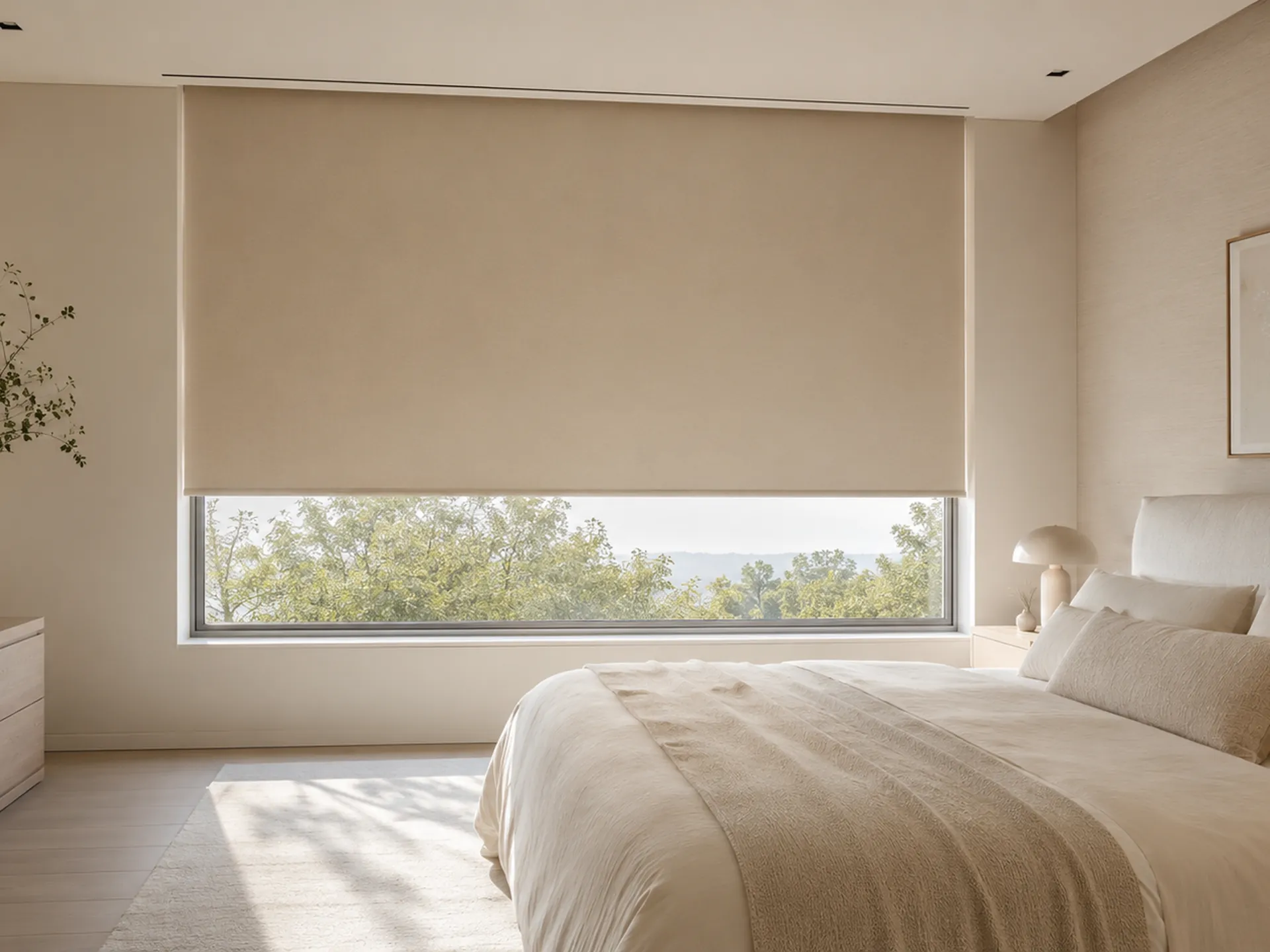
| Feel | Warm, real timber — sits well with wood and laminate floors | Clean and minimal — suits modern rooms and condos |
The price gap
| Product | Starting price | Minimum per unit | Motor per unit | Installation per unit |
|---|---|---|---|---|
| Wooden Blind | 1,790 THB/sq yd | 1.8 sq yd | 25,000 ฿ | 200 THB per unit · under 10 units is a flat 2,000 THB · free over 20,000 THB |
| Motorized Roller Blind | 690 THB/sq yd | 1.5 sq yd | 5,000 ฿ | 200-2,500 THB per unit depending on size |
Excludes VAT · the final price depends on fabric grade and how many units
Read both columns together. Wooden blinds are clearly more per square yard and carry a higher per-unit minimum — but a motorized roller adds 5,000 THB of motor to every unit, which narrows the gap more than the first row suggests. The 25,000 THB in the wooden blind's motor column is for a made-to-order motorized version — a special order, not the normal price of the category, since wooden blinds are sold manual and a manual blind has no motor cost at all. The full breakdown is in what a motorized roller blind costs.
Sizes each one is made in
| Product | Width (cm) | Height (cm) |
|---|---|---|
| Wooden Blind | up to 250 | up to 300 |
| Motorized Roller Blind | 50+ | 100+ |
Larger openings are still possible — they are simply split into several units. Message us.
Size limits decide more of these choices than people expect. A wide sliding door or a full glass wall usually exceeds what one unit can cover, so it's either split into several units side by side, or you move to a vertical blind, which is built for wide openings in the first place.
Choose a wooden blind if
- You want fine control over the light — a home office where glare hits the screen, for instance. Tilt it away without closing the window off.
- You want real timber warmth, and the room already has wood or laminate floors.
- You want daylight without passers-by seeing in.
Choose a roller blind if
- You want it motorized, because the window is high or there are several in one wall.
- You want a properly dark bedroom — blackout fabric handles that.
- You're on a dusty main road. One flat panel beats wiping dozens of slats.
- You want the window to stay quiet and let the furniture do the talking.
Plenty of homes use both — wooden blinds in the study and living room, motorized blackout rollers in the bedrooms. There's no rule that a house has to pick one. If you want the tones to sit together, say so when we bring the samples.
Can wooden blinds be motorized?
Yes, they can. The standard version is manual; motorized is made to order and the motor is 25,000 THB per unit, charged separately from the blind itself — send us your sizes and we'll work out the figure.
Wooden blinds in a bathroom or kitchen?
They handle humidity well, but if the spot gets splashed directly or catches a lot of cooking grease, talk to us first about which material suits that window.
Want the numbers for your own windows?
Send rough sizes first — no need to measure precisely. We'll work out a price, then arrange the real measure.